

How to Choose Shelf Brackets: Depth, Fixings and Pack Size
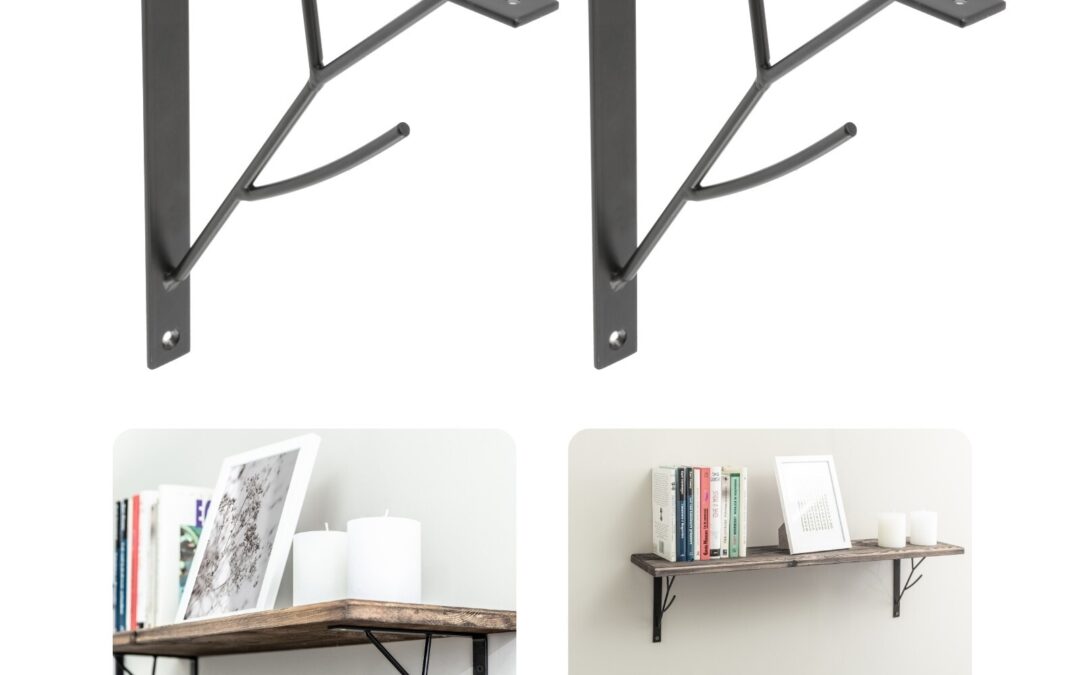
A shelf bracket can look right in a photograph yet be wrong for the board you want to fit. Before choosing a finish or decorative shape, write down the shelf’s width along the wall, its depth from front to back and its thickness. Then compare those measurements with the bracket’s technical drawing, mounting arrangement and supplied quantity.
This guide covers visible wall-mounted brackets for timber or board shelves. Small cabinet shelf pins, glass clamps and concealed floating-shelf rods use different fittings and need a separate comparison. Keep the exact product code with your measurements so that information from a similar-looking model does not get mixed in.
Compare shelf depth with usable support space
The largest number in a product name may describe the height of the wall plate rather than the part beneath the shelf. Look for a labelled drawing that distinguishes overall height, projection from the wall and the area that actually accommodates the board. A decorative diagonal or raised frame can reduce that usable space.
For example, GTV describes its INGRID support as 26 × 23 cm, but separately specifies a maximum shelf width of 209 mm and a maximum thickness of 20 mm. Do not read the overall dimensions as permission to fit a shelf of any depth. Compare your board with the manufacturer’s stated limits and drawing.
Check GTV’s INGRID dimensions and shelf limits.
Check board thickness and mounting holes
Measure the actual board, including any edge strip, instead of relying on its nominal size. This matters especially where the shelf fits between parts of the bracket rather than resting on a simple open arm. Check that the board can sit in its intended position without forcing or modifying the support.
If you are replacing existing brackets, compare the mounting-hole positions too. Similar overall dimensions do not mean that the old holes will line up. Record both the wall attachment points and the way the shelf attaches to the bracket; do not assume that a familiar triangular shape uses the same pattern.
View the INGRID triangular shelf brackets, supplied as a pair.
Choose wall fixings for the actual substrate
Identify what is behind the finished wall surface before selecting fixings. Solid masonry, hollow blocks and plasterboard are different fixing situations. A screw or plug that fits through the bracket hole is not, by that fact alone, suitable for the wall or intended load.
Check the fixing manufacturer’s guidance for the exact substrate, screw size, fixture thickness and load conditions. Fischer’s fixing data, for instance, separates building materials and product sizes rather than giving one universal shelf installation. If the wall construction or required fixing is unclear, resolve it with a suitable fixing specialist before buying the complete set.
See how Fischer lists substrate-specific fixing information.
Read load figures with their stated basis
Check whether a quoted load applies to one bracket, a pair or an installed shelf arrangement. Those are different descriptions. Include the shelf board itself when considering what the finished shelf will carry, and follow the manufacturer’s requirements for the supports, fixings and shelf material.
Do not multiply a headline figure by the number of brackets and treat the result as a new installation rating. The wall and the way the system is fitted still matter. Where a listing does not make the basis clear, ask for the exact model’s documentation rather than selecting a higher number from a similar product.
Count brackets and check what is included
Separate the number of shelves you want to build from the number of brackets in a pack. The Jumping Bugzy TREE and INGRID listings each supply two brackets. They do not include the shelf board or wall and shelf fixings, so those items need their own suitable specification.
The TREE model is a matt-black steel design with branch-shaped supports. Its listing identifies a 20 cm height and 17 cm length. Use those labelled item dimensions when comparing it with a shelf, and check the matching manufacturer information rather than relying on a generic packaging-dimensions field.
View the TREE branch-design shelf brackets, supplied as a pair.
Make a short checklist before ordering
Keep a note of the product code, shelf dimensions, usable bracket opening, mounting-hole pattern, required fixings and supplied pack size. Compare the current listing with the technical drawing and check availability when you are ready to order. Resolve any conflicting measurement before committing to a replacement.
Once the fit and fixing requirements are clear, compare the visible design and finish. A useful shortlist is based on the whole shelf arrangement, not just the bracket’s appearance or a load figure in isolation.
Browse shelf supports and compare the different fitting types.