

Clear vs Opaque Tarpaulins: Choosing the Right Cover
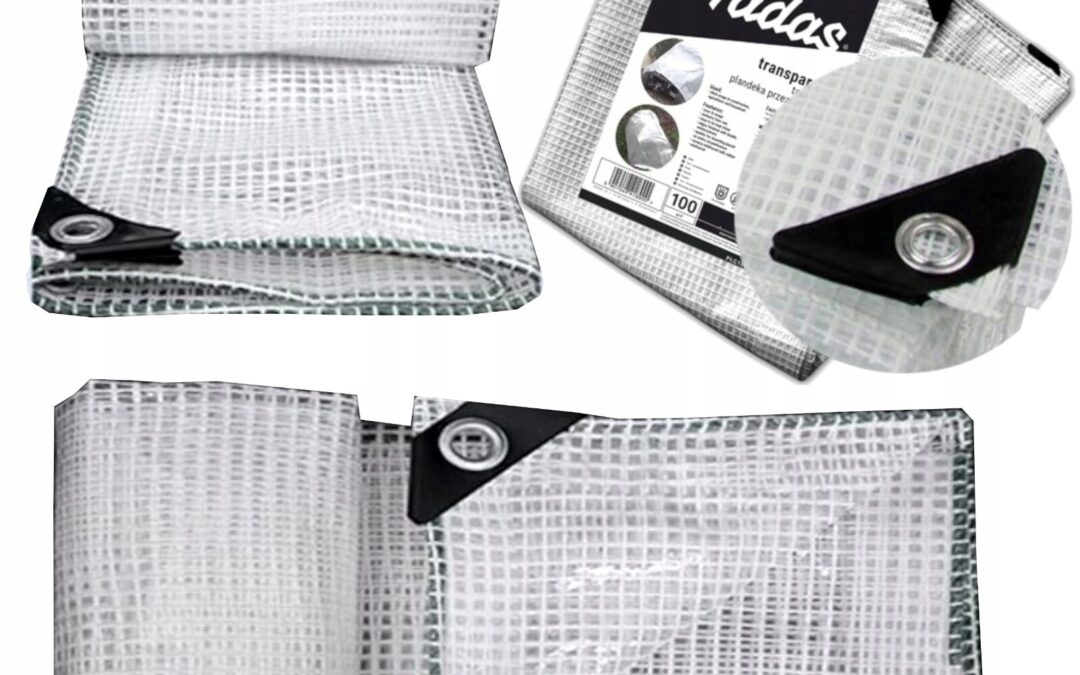
A clear tarpaulin and an opaque cover can look similar in a size selector, but they solve different problems. Before choosing a sheet, decide whether you need to see through it or would rather keep the covered area out of view. Then compare the construction, dimensions and fixings of the exact option. Colour alone does not tell you how a tarpaulin will perform.
When is a clear tarpaulin useful?
Choose a transparent cover when visibility matters: for example, when you want to check stored items without lifting the whole sheet, or keep an area visually open. A reinforced clear tarp has a visible grid, edging and eyelets, so it is not the same as an unobstructed window. Look closely at the product photographs before deciding how much visibility your project needs.
Our clear 100gsm polyethylene tarpaulin is an example of this construction. Its current listing shows reinforced corners and eyelets, with several sheet sizes. Select the required size on the product page and check its availability; a size appearing in the list does not mean that every option is in stock.
When would you choose an opaque cover?
An opaque sheet is the more natural starting point when you do not need to look through the cover and prefer a solid-colour appearance. This might suit covered garden equipment, stored materials or a tidier-looking temporary storage area. Compare the actual colour and finish in the photographs rather than relying on a small colour swatch.
Do not treat an opaque tarp as a security product or assume that a dark or silver finish guarantees a particular temperature underneath. For a use that depends on light transmission, shading or heat performance, ask for a confirmed specification instead of guessing from the colour.
Compare fabric weight and construction separately
GSM means grams per square metre: the mass of the material over a given area. It is useful when comparing listed fabric weights, but it is not a complete specification for strength, service life or suitability. Read the material, edge reinforcement, corner construction and fixing details alongside the number.
For example, our tarpaulins with bungee balls include a blue 70gsm option and a clear 100gsm option, alongside other colours and fabric weights. Changing the colour can therefore change more than the appearance. Check the full option label after every selection, especially when a size choice causes another selection to change.
Measure the whole area you need to cover
Measure the length and width, then consider the height of the object and how far the sheet must extend down its sides. A sheet matching only the top surface may leave less coverage than expected. Allow room for the intended fixing arrangement and check the listing for information about finished dimensions or manufacturing tolerances.
A small sample option is for inspecting material, not covering an object. Keep samples separate from full-sheet sizes when comparing prices. If the available sizes are close to the minimum you need, confirm the finished size before ordering rather than planning around an exact fit.
Check eyelets and what comes in the pack
Look at the eyelets, reinforced edges and corners, then decide how you will secure the sheet. Check that the planned fixing positions suit the object and the cover. Follow the product guidance and avoid pulling the cover over sharp edges. Do not assume that every photograph shows everything supplied with every option.
The bungee-ball tarpaulin listing states that fixing quantity varies with sheet size. Check the selected option and ask if the quantity is unclear. A separate clear-sheet listing should also be checked on its own; the inclusion of fixings in one product does not establish what comes with another.
A short checklist before ordering
Confirm whether you need visibility or a solid cover. Check the selected material and GSM, the full sheet dimensions, eyelet arrangement and pack contents. Finally, confirm the chosen colour and size together, the displayed price and the stock message. These checks are more useful than choosing from a product photograph alone.
Browse our tarpaulins to compare the current options.
Our tarpaulin buying guide explains sizes, GSM and securing a cover in more detail.
Guides & Advice has more practical help with choosing products.